A One-Page Plan for a Neighbourhood Swap
A one-page plan for a neighbourhood swap helps you set clear item rules, arrange a fair handover, and leave the shared space ready for its next use.
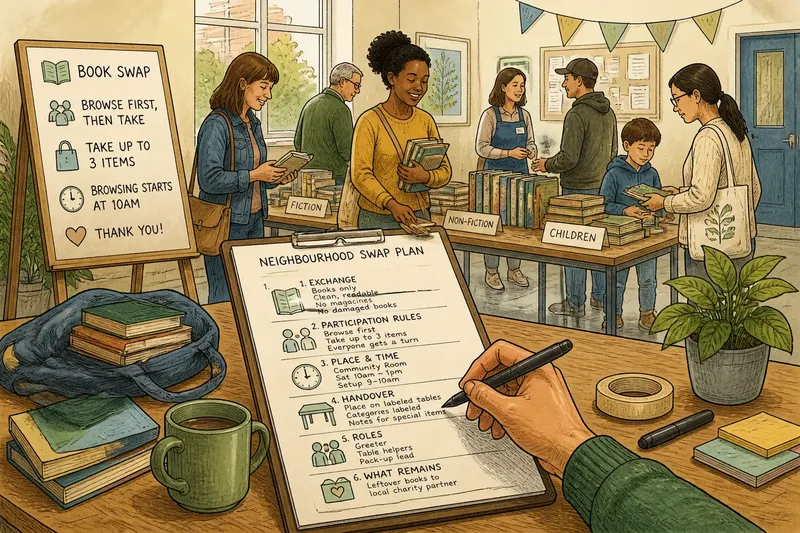
What should you decide before inviting neighbors to bring things to a swap? A one-page plan for a neighbourhood swap gives everyone the same simple expectations: what belongs, how items change hands, and who takes care of what remains. It also keeps a small event from becoming a sorting job with no clear finish.
Use one sheet of paper or a shared document, and work through it in the order below. The plan does not need to cover every possibility; it needs to make the main decisions visible to participants and helpers.
Choose the exchange
Start by deciding what the gathering is for. A focused exchange is easier to explain and manage than an open invitation to bring anything. You might choose books, children’s clothing, gardening tools, or unopened craft supplies. The category should fit your neighbors and the place available.
Set a boundary around condition as well as type. For example, say that books should be clean and usable, or that clothing should be laundered and free of obvious damage. Avoid vague wording such as “good stuff”; people can interpret it differently.
Say you have a small room at a neighborhood center and want to host a book swap. You decide to accept readable books in clean condition, but not magazines or damaged volumes. That boundary gives a participant a clear decision before they carry a box across the neighborhood.
Set the participation rules
Next, decide how people may bring and take items. A free exchange with no accounting is easy to join, but one person could take more than others. A token system can make turns clearer, though it adds preparation and tracking. A direct swap asks participants to trade item for item, which may limit choice.
Choose one approach and explain it in plain language. If the event is meant to encourage casual sharing, you could allow each person to take a small number of items after everyone has had time to browse. If you use tokens, state how people receive and spend them, and what happens if they have some left at closing.
Also decide whether people may drop off items without staying. If so, identify who receives those items and how they will be sorted. If no one can take responsibility for unattended donations, make the event a bring-and-stay exchange instead.
Match place and time
Choose a location that supports the items and the expected flow of people. A library meeting room may suit books or puzzles; a covered courtyard may work for sturdy garden tools. Consider where people will enter, set items down, browse, and leave without blocking other uses of the space.
Write the event hours and any arrival window for setup. A short setup period before doors open helps volunteers arrange tables and put up category labels. Include a clear closing time, since people need to know when browsing ends and pack-up begins.
Check the venue’s rules for room use, food, furniture, accessibility, and cleanup. The location’s instructions and any applicable local rules determine what you can offer and how the space must be left.
Plan the handover
A handover plan describes how items move from one owner to another. Decide whether participants place items directly on labeled tables or give them to a volunteer for sorting. Direct placement needs fewer helpers; volunteer sorting can make crowded tables easier to browse, but requires someone to stay attentive.
Use simple labels that reflect the categories you chose. Keep similar items together and leave enough room for people to look without moving every object. If an item needs an explanation, such as a tool with a missing accessory, attach a note rather than relying on a verbal description.
Make the exchange rule visible at the entrance and near the tables. A concise sign can state when browsing begins, whether participants may take items home immediately, and what limit applies. If you are using tokens, place the collection and return point where a helper can see it.
Assign small roles
List the tasks that must have an owner, even if one person handles several of them. Typical roles include opening the room, greeting participants, keeping the exchange rule clear, watching the item area, and coordinating pack-up. A named role prevents the assumption that “someone” will notice a problem.
- Before arrival: Confirm access to the venue and bring labels, markers, tape, and any tokens.
- At the door: Welcome people and explain where items and personal belongings go.
- During browsing: Keep paths open and answer questions about the exchange rules.
- At closing: Pause new browsing and direct remaining items to the agreed destination.
- Afterward: Return furniture, collect supplies, and check the room with the venue contact.
Ask helpers to agree on a simple way to contact one another during the event. A phone message or a quick check-in at the entrance may be enough. The aim is to make decisions consistently, not to create a complicated command structure.
Decide what remains
Before invitations go out, decide what happens to items that no one takes. Options might include asking participants to reclaim their own contributions, arranging a donation with a local organization that accepts that category, or having a named volunteer take the remainder. Do not promise a donation unless the recipient has agreed to accept the items.
Make the timing explicit: will remaining items be collected as the event closes, or must participants return for them? If a volunteer is responsible, confirm that they can transport and store the items. A clear plan prevents the venue from being treated as an indefinite holding area.
What should the plan answer?
How narrow should the item category be?
Choose a category that participants can understand at a glance and that the venue can accommodate. If the category leaves room for frequent judgment calls, add a short list of what is included and excluded.
Should people bring items before the event?
Early drop-off can help with setup, but only if a person is assigned to receive and store the items. If you cannot provide that coverage, ask participants to bring items during the event’s stated arrival window.
How can a swap feel fair?
Explain the chosen rule before people browse, then apply it in the same way to everyone. A timed first look, a modest taking limit, or tokens can each work for different groups; select the option that helpers can explain and manage calmly.
What if a participant brings an unsuitable item?
Ask a greeter to handle this kindly and privately where possible. Point to the written boundary and explain the return or removal plan, rather than placing the item on a table and leaving another participant to decide.
Finish the one-page plan
Bring the decisions together in a compact document with the event name, purpose, item rules, exchange method, place and hours, helper roles, and remaining-item plan. Add the contact person and the venue’s cleanup expectations. Keep the public-facing version easy to share, and give helpers any extra notes they need for their assignments.
Read the page as if you were arriving with a bag in hand. Can you tell what to bring, where to go, how to take part, and what happens at closing? If an answer is missing, add it before sending the invitation.
A one-page plan for a neighbourhood swap works best when its last line names who will confirm the room is clear and return it to its usual arrangement. That small assignment lets participants leave knowing the exchange has ended, not merely that the browsing has stopped.