Why Annual Gatherings Become Local Traditions
Why annual gatherings become local traditions: familiar cues and shared memories help neighbors feel welcome while leaving room for customs to change.
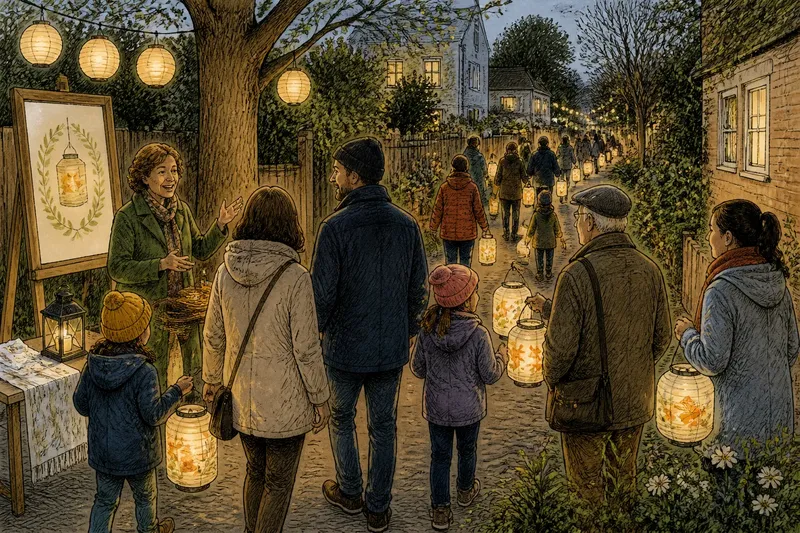
Why annual gatherings become local traditions comes down to a simple pattern: people return, recognize familiar cues, and add memories or ideas of their own. A spring lantern walk, courtyard singalong, or autumn story circle can feel rooted in neighborhood life without following an unchanging script.
Repetition makes an occasion recognizable; shared participation gives it meaning. When people can join in different ways and shape what happens next, a gathering can carry its familiar character forward as neighbors and circumstances change.
Recognizable cues
A clear opening helps people recognize the occasion. It might be a neighbor’s welcome at the park gate, a bell from the community hall, or a familiar song played on a portable speaker. The cue links this gathering to earlier ones without requiring a formal ceremony.
Choose a signal that suits the place and is easy for someone else to lead. A quiet courtyard may call for a spoken greeting, while a busy public square may benefit from a visible action, such as raising a lantern. Someone arriving late should still be able to understand what is happening and join comfortably.
Repeated colors, sounds, or gestures can also make a gathering memorable. Reusing hand-painted signs, for example, can create continuity while leaving space for new contributions. Pair a spoken welcome with a printed schedule, or describe a visual signal aloud, so familiarity does not become a private code for regulars.
Shared-place memories
A particular corner, route, or shared space can become part of how neighbors remember an occasion. The old oak beside a walking path, a hall’s painted doorway, or benches around a courtyard may give people a point of reference when they tell stories about past gatherings.
Invite brief memories without presenting one person’s account as official history. Someone might recall a child carrying a lantern or neighbors moving a circle indoors when rain began. Several perspectives help the custom belong to the people who take part now, not only to its first organizers.
Imagine a block where neighbors have held a winter light walk along the same lane. A new resident asks why the group pauses beside one garden; a longtime participant explains that neighbors once gathered there to watch the lights come on. The newcomer suggests adding a stop near another shared space, so the route keeps a familiar memory while making room for a new one.
Roles that travel
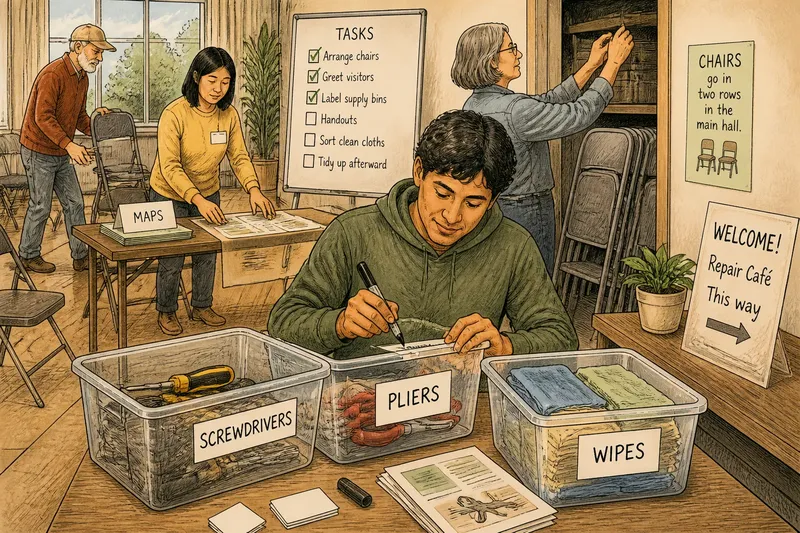
A gathering can become fragile if one person carries every detail. Small, shared roles make it easier for neighbors to continue the occasion as schedules and interests change. One person might choose the opening cue, another welcome newcomers, and another keep notes on ideas for next year.
Make each role easy to hand over. A note about where the reusable lanterns are stored or how the customary opening works can help a new organizer pick up the practical details without having to reproduce the past exactly.
Keep helping optional. A neighbor can contribute a song, lend a folding table, attend without taking a task, or simply watch from the edge. The invitation should not make volunteer work the price of belonging.
Change with continuity
A tradition can keep its familiar opening while changing its route, timing, or activities. Think of the custom as a shared pattern rather than a script. Before changing a detail, ask what participants most want to preserve: perhaps the walk together, a chance to greet neighbors, or the moment when everyone adds a light to a display.
Explain adjustments plainly at the gathering place or in a brief announcement. Say what is changing and what remains familiar, so regulars can recognize the connection and newcomers can see how to take part.
When a change affects access, consider practical alternatives. If a walking route no longer suits some participants, for instance, neighbors could keep a shared gathering point and offer a shorter route or a stationary activity nearby.
Questions about traditions?
How many years make a gathering a tradition?
There is no fixed threshold. A gathering begins to feel traditional when people recognize its returning cues, expect another occasion, and connect it with shared memories.
What if the original organizer leaves?
Pass along the useful details, such as the opening cue, where shared materials are kept, and who has offered to help. Invite a new organizer to shape the next gathering rather than asking them to recreate every past detail.
How can newcomers join without knowing the custom?
Give a brief explanation of what is happening and offer a clear welcome. Make it comfortable to watch first, join midway, or suggest an idea without already knowing the gathering’s history.
Keep the invitation open
Why annual gatherings become local traditions is not simply that they happen again. Familiar cues give people a way to recognize an occasion, while shared memories and transferable roles let them make it their own.
Before the next gathering, choose one cue worth keeping and one detail residents can reshape. That small distinction helps neighbors carry the custom forward without closing the door to people who are new to it.